MiA-RAG: Mindscape-Aware Retrieval-Augmented Generation for Long-Context Reasoning
AK
Ahad KhanAI Engineer
March 1, 2026
7 min read
RAGLLMInformation RetrievalEmbeddingsLong Context
Retrieval-Augmented Generation (RAG) has become the de facto architecture for grounding Large Language Models (LLMs) in external knowledge. The standard recipe is simple:
This works beautifully — until documents become long, structured, or semantically layered.
When dealing with research papers, legal contracts, enterprise knowledge bases, or 100+ page PDFs, vanilla RAG begins to fail. Why?
Because it retrieves locally but reasons globally.
Embedding models treat each chunk independently. They lack awareness of the document’s overall semantic structure. As a result:
Last month, MiA-RAG (Mindscape-Aware Retrieval-Augmented Generation) introduced a compelling solution: give RAG a “global mind.”
Instead of retrieving chunks blindly, MiA-RAG builds a mindscape — a hierarchical semantic representation of the entire document — and uses it to guide both embedding and generation.
Let’s break down how it works.
Humans don’t read 200-page documents by memorizing every paragraph independently. We build a high-level mental map first.
MiA-RAG mimics that behavior.
It introduces a mindscape layer that:
This transforms RAG from a flat similarity pipeline into a context-aware reasoning system.
Here’s how MiA-RAG extends the standard pipeline:
Three key additions stand out:
Let’s dive deeper.
Instead of embedding raw chunks directly, MiA-RAG first builds an abstract representation of the entire document.
This hierarchy captures:
The result is a compressed but semantically rich representation of the document’s global meaning.
Key Insight: Retrieval improves dramatically when similarity is computed with awareness of document-level semantics.
Traditional embedding models encode:
1Embedding = f(query)MiA-Emb changes this to:
1Embedding = f(query, mindscape)The embedder conditions the query representation on the global semantic scaffold.
In vanilla RAG:
With MiA-Emb:
MiA-Emb models released on Hugging Face include scalable variants (e.g., 8B parameter embedding backbones) optimized for long-context retrieval tasks.
Once retrieval happens, MiA-Gen uses a richer input context:
1[System Prompt]2[Global Mindscape Summary]3[Retrieved Chunks]4[User Query]Unlike standard RAG, the generator now sees:
This reduces hallucination because:
MiA-RAG was evaluated on long-document QA and reading comprehension benchmarks.
| System | Model Size | Retrieval Recall@10 | QA Accuracy | Long-Context Coherence |
|---|---|---|---|---|
| Vanilla RAG | 72B | Moderate | Baseline | Fragmented |
| Vanilla RAG | 14B | Low | Lower | Weak |
| MiA-RAG | 14B | High | +10–15% | Strong |
| MiA-RAG | 8B | Competitive | Beats larger baselines | Strong |
Two key takeaways:
This is critical for cost-sensitive deployments.
A simplified pseudocode implementation might look like this:
1# Step 1: Build mindscape2chunks = chunk_document(document)3summaries = [summarize(chunk) for chunk in chunks]4mindscape = hierarchical_summarize(summaries)5
6# Step 2: Mindscape-aware embedding7query_embedding = mia_embed(query, mindscape)8
9# Step 3: Retrieval10top_k = retrieve(query_embedding, chunk_embeddings)11
12# Step 4: Generation13answer = mia_generate(query, mindscape, top_k)
In practice, models are fine-tuned jointly to internalize this conditioning rather than simply concatenating text.
MiA-RAG is particularly powerful for:
These domains require reasoning across distributed evidence — something vanilla RAG struggles with.
By introducing structured semantic awareness, MiA-RAG:
One natural question: does adding a mindscape layer increase latency?
Yes — but strategically.
However:
In many cases, total system cost decreases because you can use smaller base models.
Let’s summarize the structural difference:
| Feature | Vanilla RAG | MiA-RAG |
|---|---|---|
| Chunk-Level Embedding | Yes | Yes |
| Global Semantic Representation | No | Yes |
| Query Conditioning | Isolated | Context-Aware |
| Multi-Hop Retrieval | Weak | Strong |
| Long-Document Coherence | Moderate | High |
| Hallucination Resistance | Limited | Improved |
MiA-RAG doesn’t replace RAG.
It upgrades it.
What makes MiA-RAG especially compelling is its alignment with human cognition.
Humans build:
MiA-RAG operationalizes that idea into transformer architectures.
This is part of a broader trend: Moving from token-level intelligence → structure-aware intelligence.
No system is perfect.
Potential challenges include:
Future iterations may address this via:
MiA-RAG opens several research directions:
We are moving toward RAG systems that don’t just retrieve — they understand.
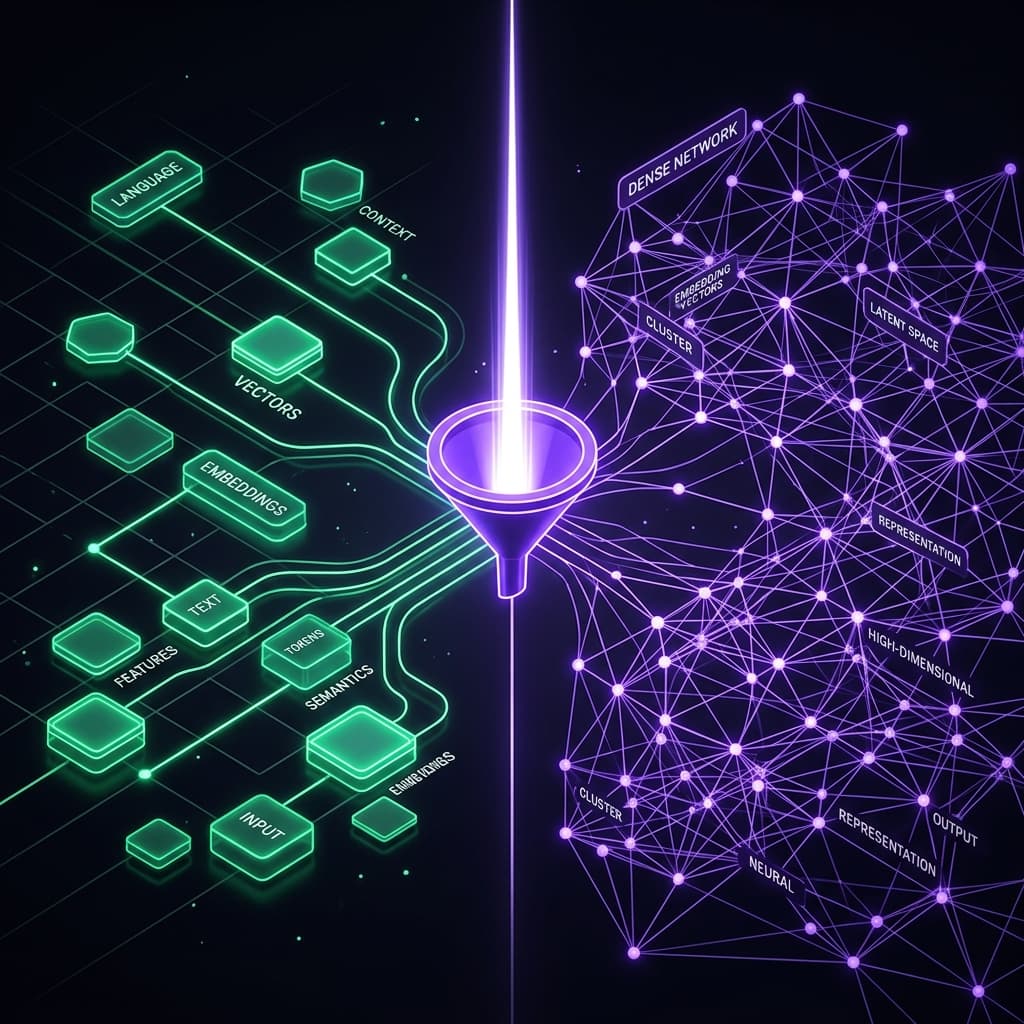
Vector search fails on exact product codes, acronyms, and part numbers. Learn how combining BM25 keyword matching with dense vectors using Reciprocal Rank Fusion (RRF) and cross-encoder reranking boosts retrieval precision by +23%.
A walkthrough of my real OpenClaw deployment: 13 Telegram topics, GPT-5.2 on Azure free tier, Playwright browser automation with anti-bot bypass, and a massive ecosystem of over 5,700 ClawHub skills powering my Second Brain. Pulled directly from my live droplet.
Basic vector search fails in production. Learn how we engineered a multi-stage RAG pipeline with hybrid search, re-ranking, and agentic loops to achieve 90%+ accuracy.